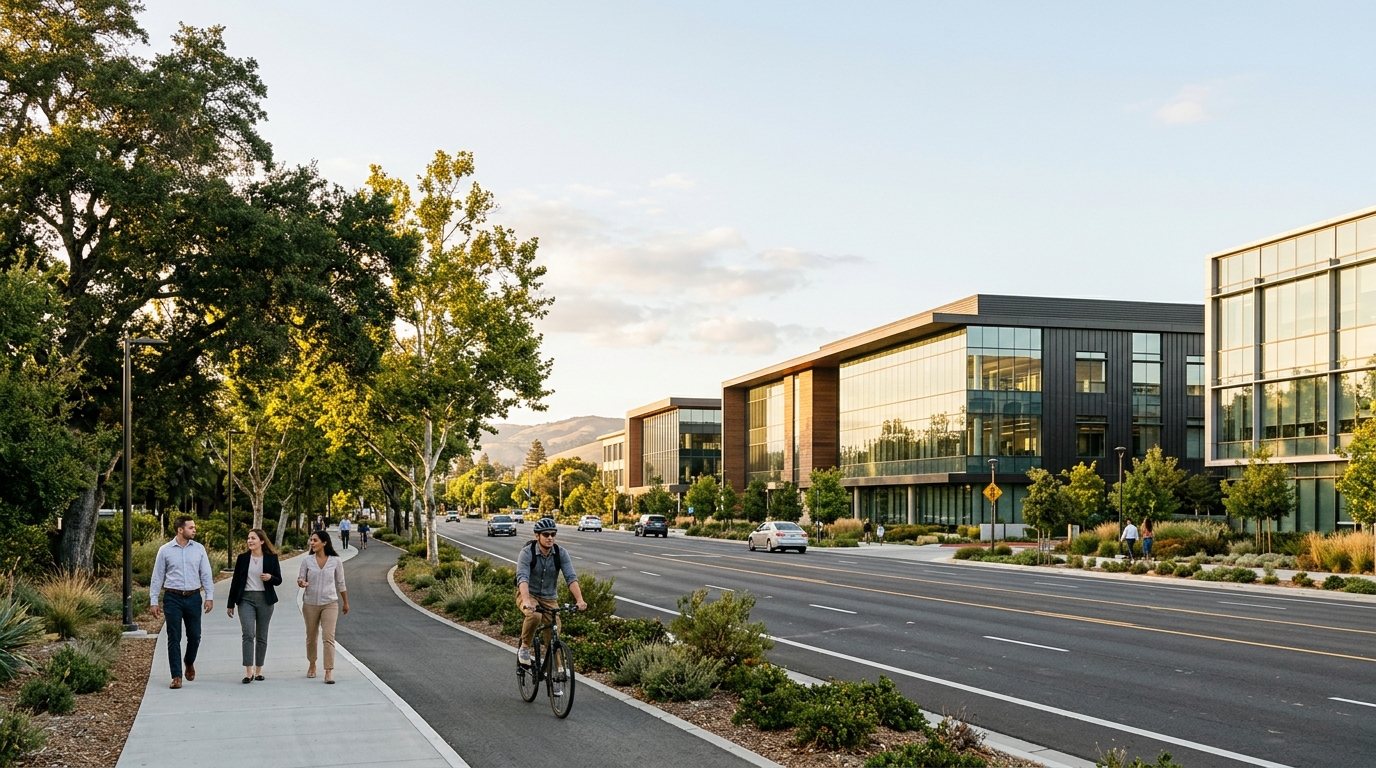
East Sunnyvale could look noticeably different in the years ahead as the city works on a new plan for an 80-acre employment district around East Arques Avenue and Commercial Street. Known as the Central Arques Specific Plan, or CASP, the project is intended to update development rules for an area dominated by industrial and research-oriented businesses, including a large concentration of property owned by Applied Materials.
Unlike many major planning efforts in the Bay Area, this one is not centered on new housing. Sunnyvale says the Central Arques plan is focused on industrial growth, new technologies, workplace expansion, mobility and the physical character of the district. The city is studying how property owners could build more industrial floor area, how tall future buildings could be and what streetscape and infrastructure improvements would be needed to support that growth.
As of August 2026, the city’s project page says staff are preparing studies for an Environmental Impact Report and drafting the specific plan. Public review and comment are expected before the Planning Commission, other commissions and the City Council consider final action. For residents, workers and nearby businesses, that makes this an important planning process to follow rather than a finished redevelopment project.
What the Central Arques Specific Plan Would Actually Do
The Central Arques area sits in a part of Sunnyvale that many people experience primarily as an employment and industrial district. Its boundaries are East Arques Avenue on the north, Commercial Street on the west, Central Expressway on the south and Santa Trinita Avenue on the east. The city describes the plan area as approximately 80 acres.
The new plan would replace the Arques Campus Specific Plan adopted in 1999. That older plan was created to guide future development on the Applied Materials campus but was never fully built out. Over time, Applied Materials acquired additional properties around its campus, and the city began considering a broader framework for the area.
A Modern Workplace District Rather Than a Residential Neighborhood
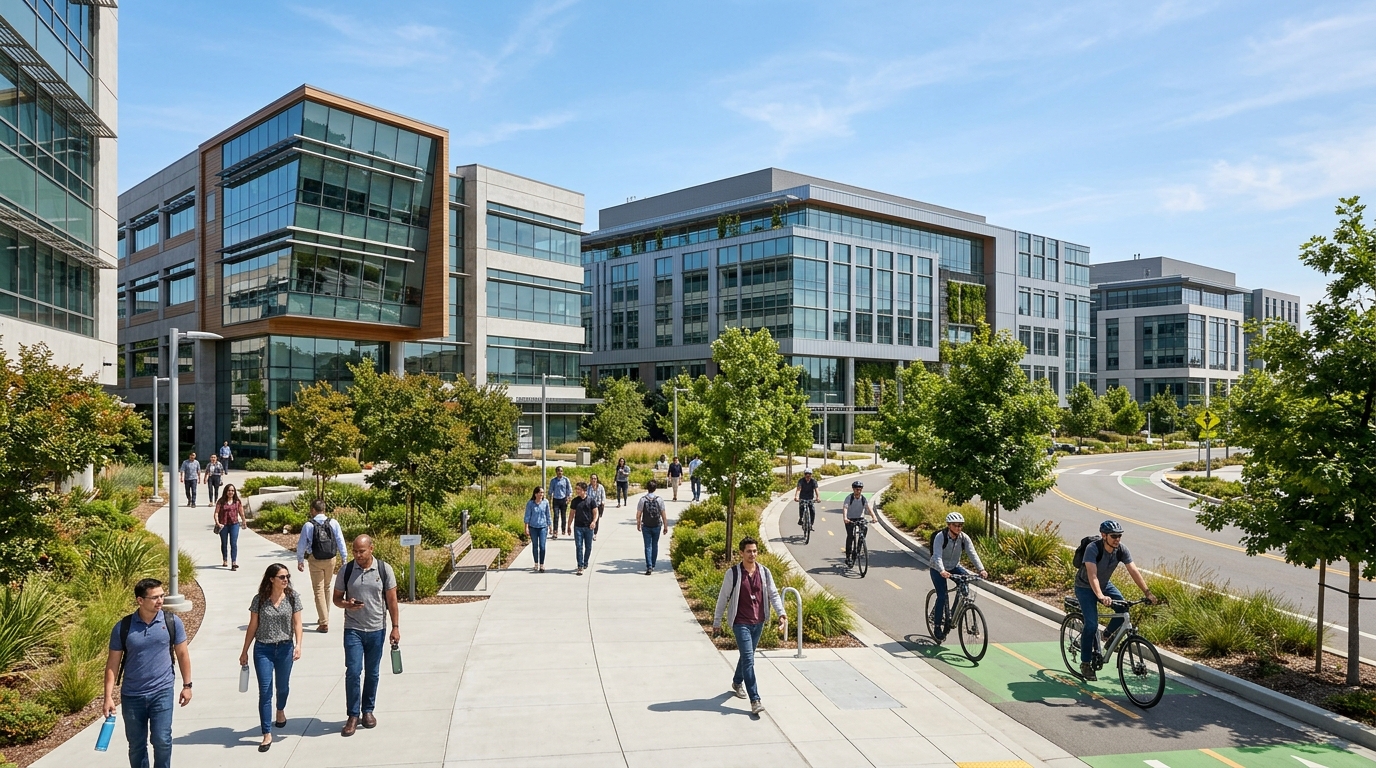
The central idea behind CASP is to create what Sunnyvale calls a contemporary workplace environment with improved mobility and urban character. That means the plan is primarily about how an employment district functions, grows and looks rather than how it converts to apartments or mixed-use housing.
Sunnyvale specifically states that residential uses are not proposed as part of the plan. Instead, the city is studying additional industrial development and the possibility of allowing new building heights of up to 100 feet. Future buildings could support research, advanced manufacturing, technology development and other industrial uses allowed under the final plan.
This is an important distinction from other parts of Sunnyvale. The city’s Village Centers, for example, are focused on combining housing with neighborhood retail and services. Downtown Sunnyvale is evolving as a mixed-use center with homes, offices, dining, shopping and public spaces. Central Arques has a different job: preserving and modernizing a major employment area.
Why the City Is Replacing the 1999 Arques Campus Plan
The current planning effort has roots in a request made several years ago. In 2021, Applied Materials asked Sunnyvale to consider allowing more floor area and taller building heights on properties in the district. The City Council then directed staff to develop a new specific plan rather than simply treating the request as a change affecting a single campus.
That broader approach lets the city evaluate the entire area at once. Additional buildings can bring more employees, vehicle trips, deliveries and utility demand, so a specific plan can coordinate development with design standards, infrastructure and transportation strategies.
There is already evidence of continued investment in the area. In 2023, Applied Materials submitted plans for a new research and development building using square footage permitted by the existing 1999 plan, and the Sunnyvale Planning Commission approved that R&D building in April 2024. CASP is intended to establish the rules for future development across all properties inside the larger plan boundary.
Mobility and Streetscape Improvements Are Part of the Plan
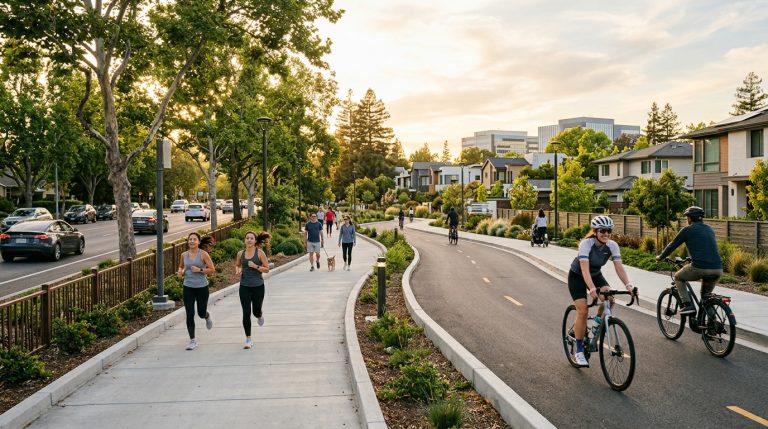
More workplace development does not only mean taller or larger buildings. Sunnyvale says CASP will also include streetscape and infrastructure improvements. Those details could shape how the district feels for employees, pedestrians, bicyclists and drivers.
East Arques Avenue and nearby employment streets reflect an older automobile-oriented industrial pattern. A contemporary workplace district may need better sidewalks, safer crossings, bicycle connections, landscaping and other transportation improvements.
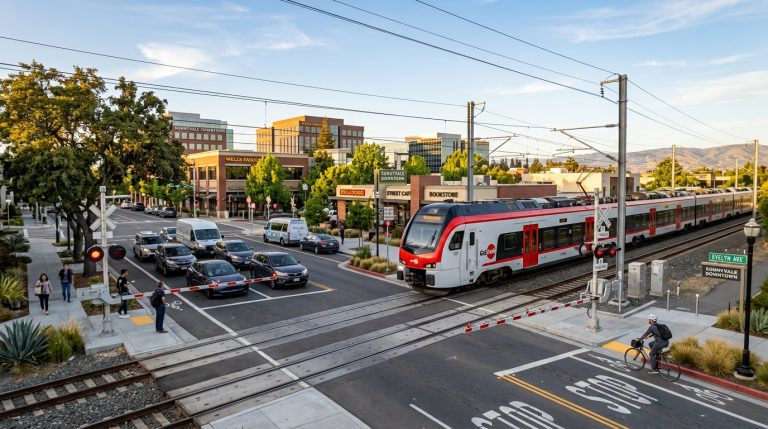
The mobility discussion also connects with larger transportation projects occurring elsewhere in Sunnyvale. The proposed East Channel Trail is studying a nearly six-mile north-south walking and bicycling connection, while other city projects are examining rail crossings, trails and safer active-transportation routes. These projects are separate, but together they show that Sunnyvale is planning for growth and mobility at the same time.
What Residents and Workers Should Watch in 2026
The Central Arques plan is still a planning document in progress. It does not authorize every future building automatically, and the city has not announced that the entire 80-acre area will suddenly be reconstructed. Property owners would still need to pursue projects under the rules that are ultimately adopted.
For now, the most important questions involve environmental review, building scale, transportation, infrastructure and how the district will function as more intensive industrial development becomes possible.
The Environmental Impact Report Is a Major Next Step
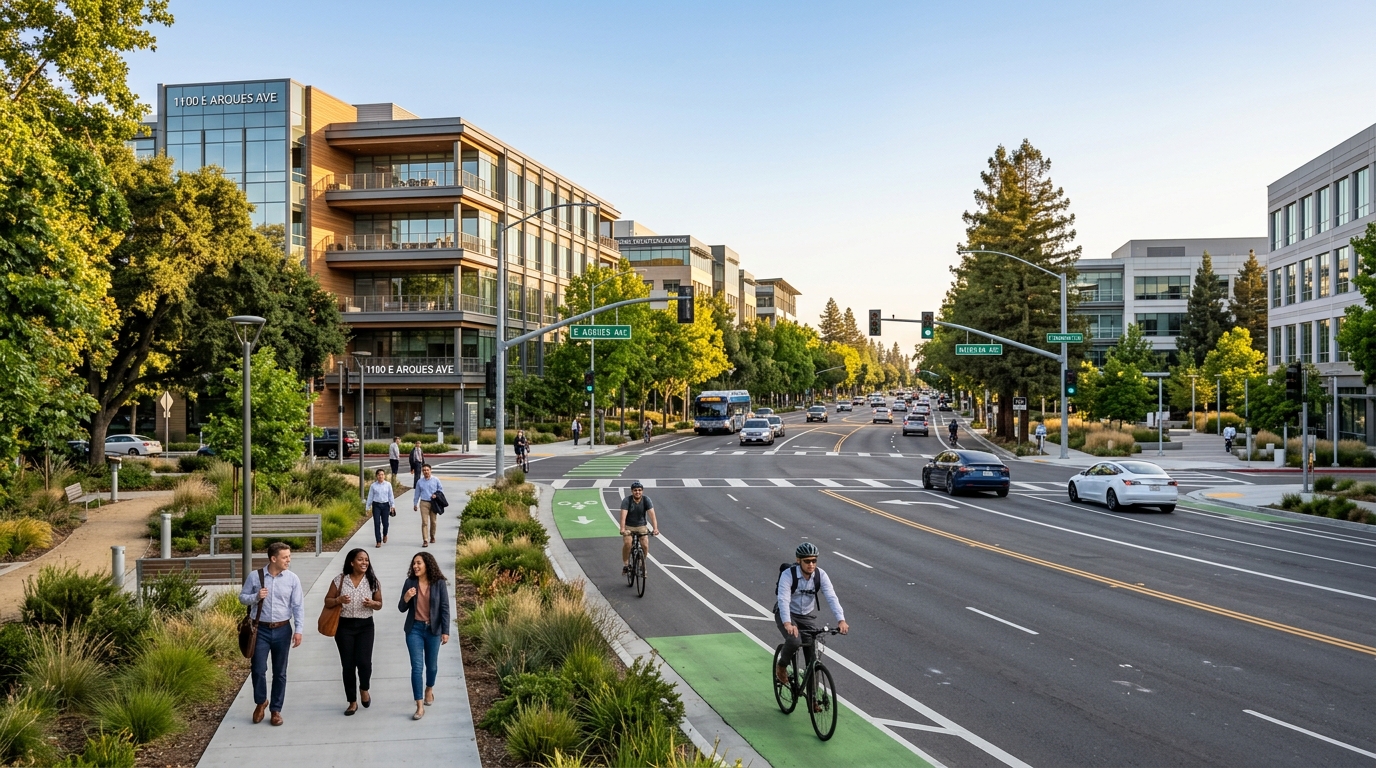
Sunnyvale’s current project status says the city is preparing studies for an Environmental Impact Report, commonly called an EIR, while also drafting the specific plan. Environmental review is a major part of California’s planning process because it evaluates potential effects and identifies measures that may be required to reduce significant impacts.
Depending on the scope, the review can examine transportation, air quality, noise, utilities, greenhouse-gas emissions and other environmental topics. The draft EIR should provide far more detail than the city’s general planning summary.
The city says there will be opportunities for public review and comment on both the draft plan and the EIR before final City Council action. The official Central Arques Specific Plan project page is the best place to follow those releases and meeting dates.
Building Heights Could Reach 100 Feet
One of the most visible changes being studied is additional building height. Sunnyvale says the plan will evaluate allowing new buildings up to 100 feet tall. That does not mean every building in the district would reach that height, but it would give qualifying future projects more vertical development potential than some existing conditions allow.
Height can change the skyline and character of an employment district while allowing more floor area on already-developed sites. Final standards will be important for understanding setbacks, design expectations, landscaping and how larger buildings relate to surrounding streets.
There Is No Residential Component in the Current Vision
Sunnyvale’s statement that CASP is not proposing residential uses is worth emphasizing. In a region where many redevelopment stories revolve around housing, readers could reasonably assume an 80-acre planning area might become another mixed-use district. That is not the city’s stated direction here.
The plan is aimed at supporting industrial businesses and allowing them to expand into new technologies. That gives Central Arques a specialized role within Sunnyvale’s broader growth strategy. Housing growth is being addressed through other plans and projects, while this district is being positioned to remain an employment and innovation center.
That separation may also influence nearby businesses. More employees and larger workplaces can increase demand for restaurants, coffee, shopping and services in surrounding parts of the city. Readers looking for existing options can browse our Sunnyvale restaurant guide, coffee shops and local services directory.
Public Review Will Determine What Reaches the Finish Line
The city currently lists summer 2026 as the target for completing the planning process, while its project page still shows the plan and environmental studies in preparation. Residents should rely on the latest posted meeting notices and documents rather than assuming a final plan has already been adopted.
Upcoming input opportunities are expected to include study sessions and public hearings with city commissions and the City Council. Those meetings are where details such as building intensity, transportation measures, public improvements and environmental findings can be debated before a final decision.
Central Arques may not attract the same immediate attention as a new downtown restaurant or a neighborhood housing project, but its long-term impact could be substantial. An 80-acre employment district with updated development capacity, taller buildings and improved infrastructure can influence jobs, traffic patterns, investment and the physical identity of East Sunnyvale for decades.
For that reason, 2026 is a useful time to understand the project while the plan is still taking shape. The central question is not whether East Sunnyvale will become another residential neighborhood. It is how Sunnyvale can modernize an established Silicon Valley employment district while handling the transportation, infrastructure and environmental demands that come with future growth.